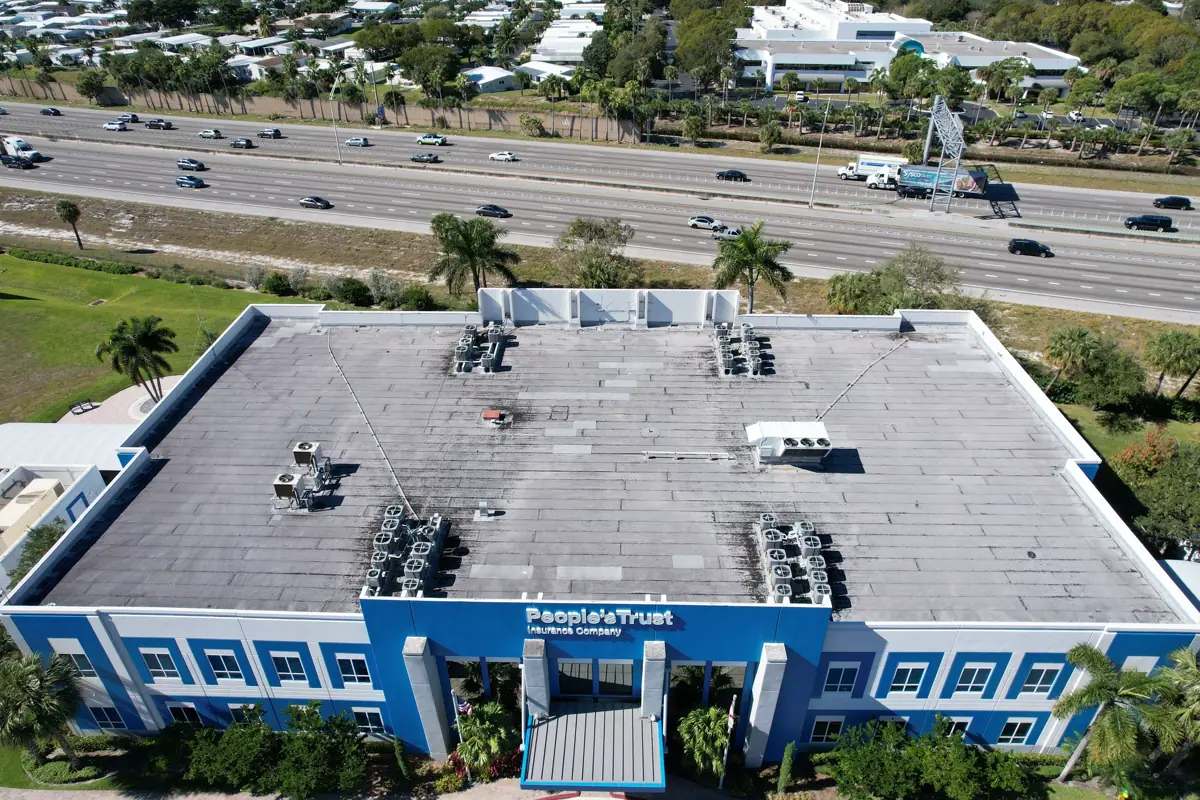
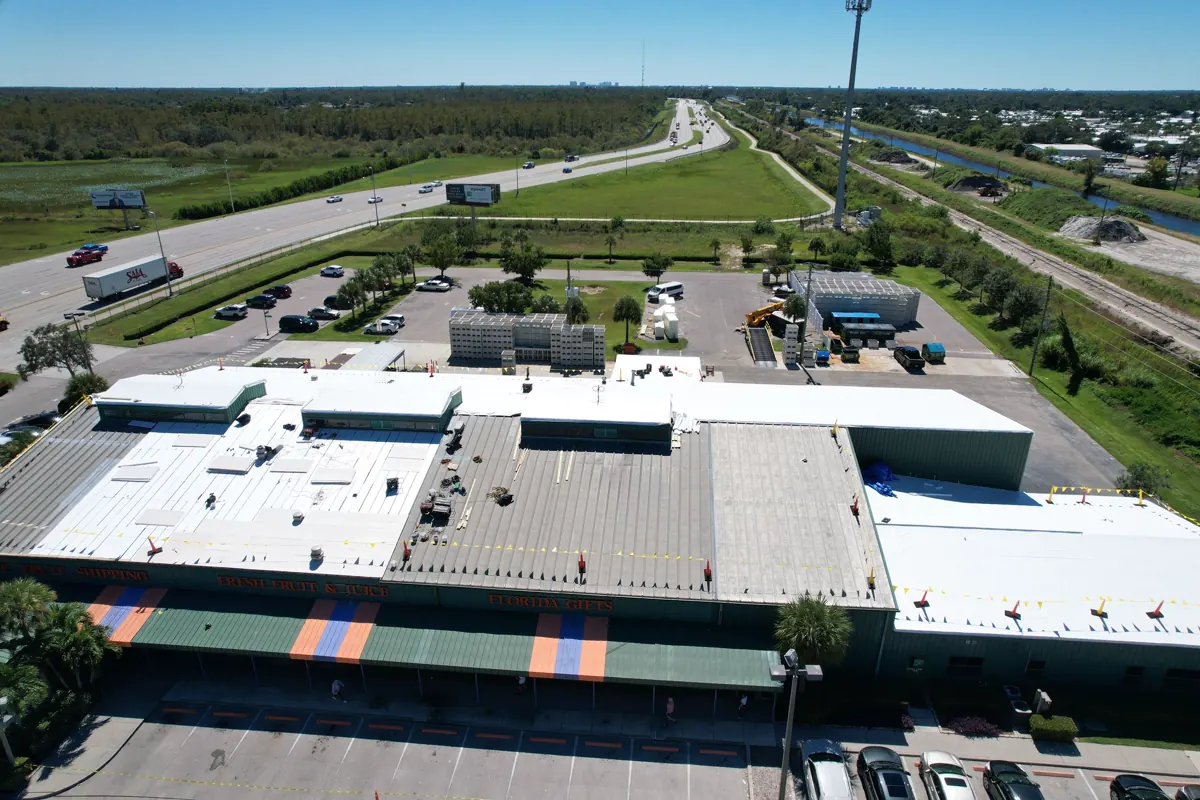
You've been told your commercial roof needs replacing. The proposed replacement scope is substantial. Before you write that check, there's a question nobody's asking: does your roof actually need to be replaced, or does it just need to be restored — see our full breakdown in coating vs. full replacement?
Silicone roof coatings can be useful on qualifying commercial roofs and may complement a long-term maintenance program. They are not appropriate for every assembly. Eligibility, comparative cost, warranty options, and service expectations require inspection and a property-specific scope.
What Is a Silicone Roof Coating?
A silicone roof coating is a liquid-applied membrane that bonds directly to your existing roof surface. Once cured, it creates a seamless, waterproof, UV-reflective layer that protects the roof below.
- Application: Sprayed or rolled onto the existing roof — no tear-off required
- Thickness: 20-30 mils dry film (about the thickness of a credit card)
- Color: White or light gray — highly reflective
- Compatible with: TPO, EPDM, metal, modified bitumen, built-up roofing, spray foam
- NOT compatible with: Shingles, tile, roofs with active structural damage
The Math: Coating vs. Full Replacement
A defensible comparison for a commercial building in Naples, FL starts with a professional roof inspection. Compare the same roof areas, preparation, wet-insulation quantities, flashing details, drainage work, access, warranty requirements, exclusions, and closeout deliverables.
Replacement proposal inputs
Tear-off and disposal, insulation, membrane, flashings, edge metal, penetrations, drainage corrections, access, phasing, permits, warranty, and closeout.
Coating proposal inputs
Compatibility, moisture survey, adhesion testing, cleaning and preparation, repairs before coating, specified dry-film thickness, detail work, access, warranty, and closeout.
Coating may avoid tear-off on a qualifying roof, but no universal percentage or cost-per-year comparison applies to every property.
The Energy Savings Nobody Talks About
Want to know what this means for your roof?
One call. We'll tell you exactly where you stand.
Call 786-696-4829This is where the ROI gets interesting. A white silicone coating reflects up to 88% of UV rays, dramatically reducing roof surface temperature. In Florida, that translates directly to lower cooling costs.
Use a qualified energy professional and property-specific baseline if energy performance is part of the investment decision. OGC does not promise a universal savings percentage or return on investment.
When Coatings Make Sense
- Existing roof is structurally sound but showing surface wear
- No active leaks or damage to the deck below
- Roof is flat or low-slope (TPO, EPDM, metal, modified bitumen)
- Building owner plans to hold the property 10+ more years
- Budget is a constraint — coating gives you 15-20 more years to plan for full replacement
- Occupied building where tear-off noise and disruption is a problem
When Coatings Don't Make Sense
- ❌ Roof has active structural damage — rotted decking, compromised insulation
- ❌ Existing membrane has more than 25% of seams failed
- ❌ Ponding water exceeds 48 hours after rain (coating won't fix drainage)
- ❌ Roof is less than 10 years old — it doesn't need coating yet
- ❌ Steep-slope shingle or tile roof — coatings don't work on these systems
The Florida Insurance Question
Here's what you need to know: Citizens Insurance does NOT count coatings as a roof replacement. If your roof is old enough that insurance companies are questioning coverage, a coating alone may not satisfy their requirements.
That said, a coating combined with documented repairs and an inspection report can support your roof's condition record and help demonstrate to insurers that the roof is performing. Frame it as maintenance documentation, not a replacement claim.
We always recommend discussing insurance implications with your agent before committing to a coating on an older roof.
What a Proper Coating Job Looks Like
- Inspection: We assess the existing roof — membrane condition, seam integrity, insulation moisture, deck condition. If the roof doesn't qualify, we tell you.
- Repairs: Every bad seam, cracked flashing, and failed penetration gets repaired first. The coating goes over a solid roof — not a damaged one.
- Surface prep: Power wash to remove dirt, debris, and oxidation. The coating won't bond to a dirty surface.
- Primer (if needed): Some substrates require a primer coat for proper adhesion.
- Coating — 2 coats: First coat applied, allowed to cure. Second coat applied perpendicular to the first. Minimum 30 mil dry film thickness total.
- Final inspection: Thickness measurements, photo documentation, and a written warranty.
The whole process takes 3-5 days for a 20,000 SF roof. No tear-off. No dumpsters. Minimal noise. Your business stays open.
The Bottom Line
A silicone roof coating is not a shortcut. It is a condition-dependent option that should follow moisture, adhesion, drainage, substrate, preparation, warranty, and scope review. That is asset management—not a universal savings promise.
For the wrong building — one with structural damage or failed drainage — a coating is money wasted. The key is getting an honest assessment from someone who does both coatings and full replacements, so they're not incentivized to push one over the other. Our reroofing vs. coating restoration decision guide walks through exactly how we make that call using core cuts and infrared scanning. If you're comparing coating against a full replacement ROI, our silicone roof coatings benefits breakdown covers everything a coating actually delivers — including ponding water resistance and long-term recoatability.
We do both. We'll tell you which one your roof actually needs.
Find Out If Your Roof Qualifies for Coating
Free roof assessment — we'll inspect the membrane, test moisture levels, and give you a straight answer on whether coating or replacement makes more sense for your building.
Call 786-696-4829