Electronic Leak Detection for Commercial Roofs & Waterproofing
Published November 2026 · Ocean Group Construction
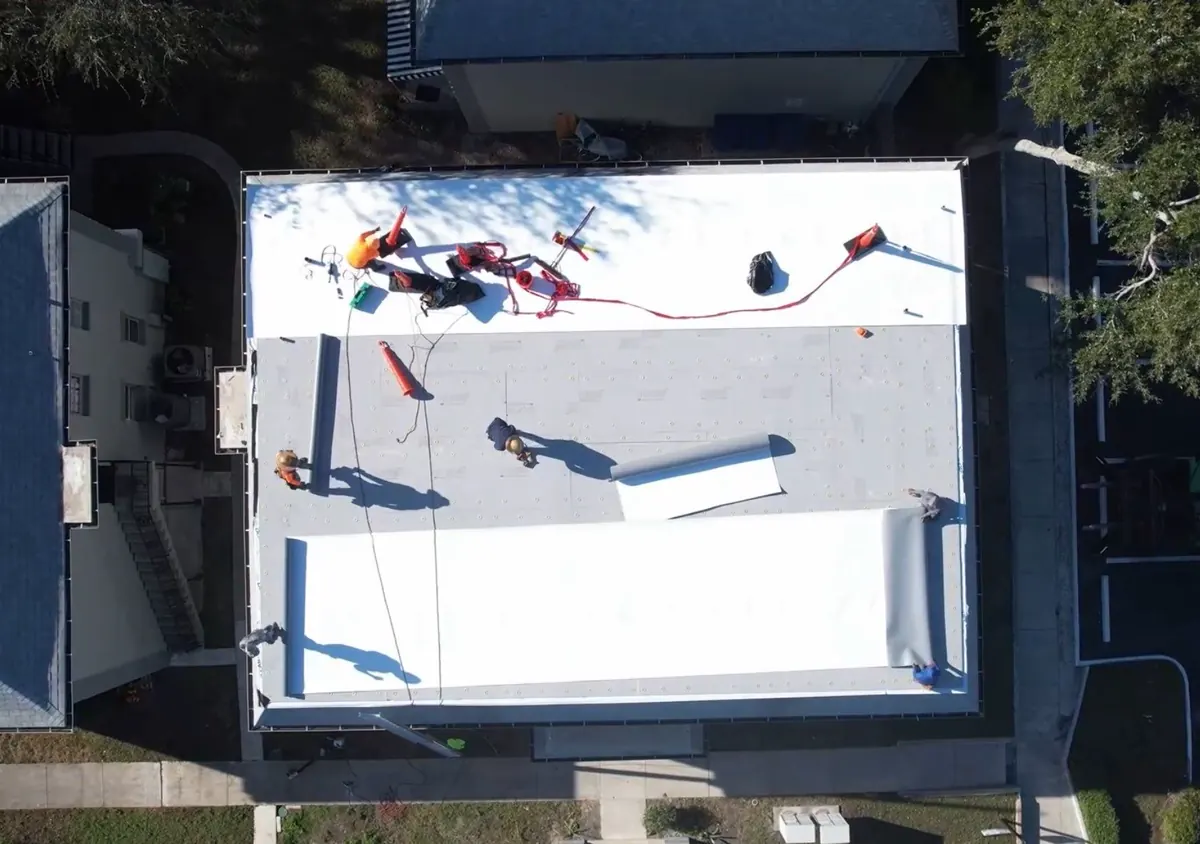
Electronic leak detection can locate breaches in electrically insulating roofing and waterproofing membranes when the assembly provides a valid conductive return path and the selected method fits the membrane condition. It is a membrane-integrity tool—not a universal explanation for where building water came from.
The direct answer
Specify ELD when the decision is to find and document membrane breaches on a compatible assembly, especially before the membrane is concealed by overburden. Keep visual inspection, detailing review, moisture assessment and project-specific verification in the scope because ELD does not replace them.
What ELD actually detects
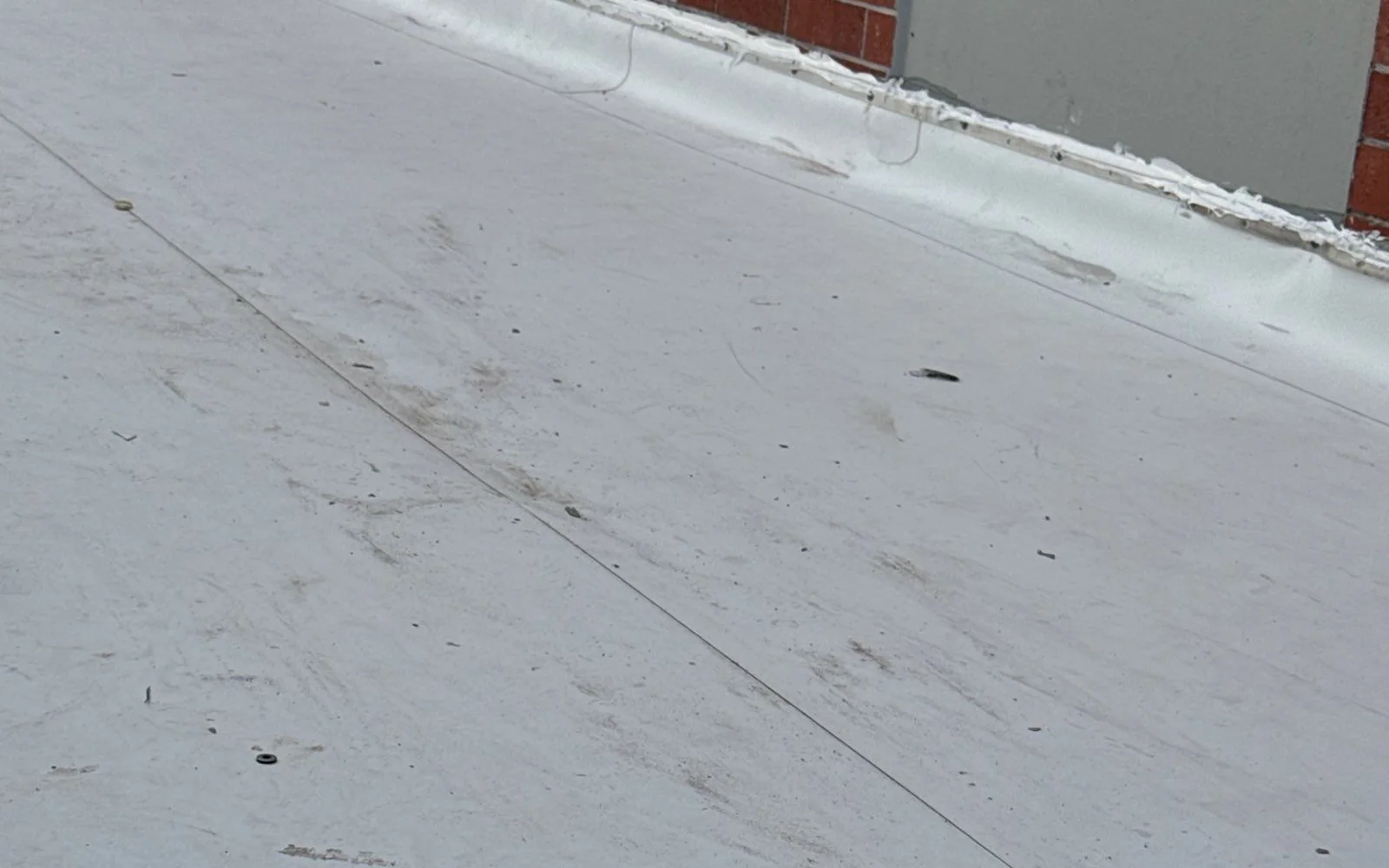
ASTM D7877-25 describes electrical-conductance methods used to locate breaches in exposed or covered roofing and waterproofing membranes. The methods establish an electrical potential across an electrically insulating membrane and use a conductive path through a breach to identify its location.
The guide covers quality-control, integrity and forensic uses, with method-specific limitations. It explicitly says ELD is not intended to replace visual, infrared or other inspection methods.
Low-voltage scanning
ASTM D8231-24a addresses a low-voltage, dual-sweep scanning method for locating breaches on horizontal and vertical surfaces in exposed roofing and waterproofing membranes. The practice requires calibrated equipment and regular verification of detection sensitivity under the equipment manufacturer’s procedures.
Low voltage does not mean “works on every roof.” The membrane and substrate have to support the electrical test path, surface conditions must fit the method and details or boundaries may require separate treatment.
The conductive-path requirement
Electrical conductance testing requires a conductive substrate or dedicated conductive medium beneath the membrane to provide a return path. Insulating foam, protection boards or other nonconductive layers can interrupt that path unless the assembly was designed with a suitable conductive layer directly below the membrane.
This is why ELD should be discussed during design or preconstruction—not added after overburden is installed and the actual assembly is unknown. The test provider should confirm compatibility from drawings, submittals, field conditions and equipment requirements before promising results.
ELD versus a roof moisture survey
| Question | ELD | Moisture survey |
|---|---|---|
| Primary output | Location of a conductive breach in a compatible membrane assembly | Suspect or verified moisture-affected materials |
| Best timing | Quality control before concealment; integrity or forensic testing where compatible | Condition assessment, maintenance, scope development or due diligence |
| Does it prove entry path? | No; it locates a membrane breach, not necessarily the complete water route | No; it maps affected materials and requires interpretation and verification |
When ELD is worth specifying
- before pavers, landscaping, insulation, toppings or other overburden conceal a waterproofing membrane;
- after other trades have worked over a completed membrane;
- during quality assurance on high-consequence occupied spaces;
- when a compatible exposed membrane needs breach-location testing; or
- during a forensic investigation where the assembly and surface conditions support the method.
What a useful ELD report should include
- roof or waterproofing plan and tested boundaries;
- membrane, substrate and conductive-path description;
- method, equipment, calibration and sensitivity verification;
- surface and weather conditions where relevant;
- marked breach locations tied to photographs and plan coordinates;
- repairs and retesting status;
- excluded areas, access limits and assembly limitations; and
- a clear statement of what the test does and does not establish.
Procurement questions before authorizing ELD
- Which ASTM method and equipment procedure applies to this assembly?
- Who performs the test, and what qualifications or manufacturer training apply?
- Is the conductive return path documented?
- Will the membrane be exposed or covered during testing?
- Who repairs identified breaches, and who retests them?
- What report, plan markup and closeout record will ownership receive?
Scope boundary
This guide does not state that OGC owns ELD equipment or performs every test method. OGC confirms the roofing or waterproofing scope and coordinates project-specific testing requirements after the assembly and decision are known. Qualified testing providers, design professionals, manufacturers and the authority having jurisdiction may have separate responsibilities.
Continue with OGC’s commercial waterproofing, plaza-deck waterproofing, leak investigation and moisture-survey guide.