When Can a Florida Commercial Roof Be Recovered Instead of Torn Off?
Published November 2026 · Ocean Group Construction
A membrane recover can reduce demolition and disruption on the right building. It is not a shortcut around wet materials, weak attachment, incompatible assemblies, code requirements, or manufacturer rules. The existing roof has to qualify as a base for the proposed system.
The direct answer
A Florida commercial roof may be a recover candidate only after the existing layers, moisture condition, substrate, attachment, drainage, design pressures, product approval, manufacturer requirements, and local permit path are verified. If the existing roof cannot legally or technically support the proposed assembly, the comparison ends: tear-off or another compliant scope is required.
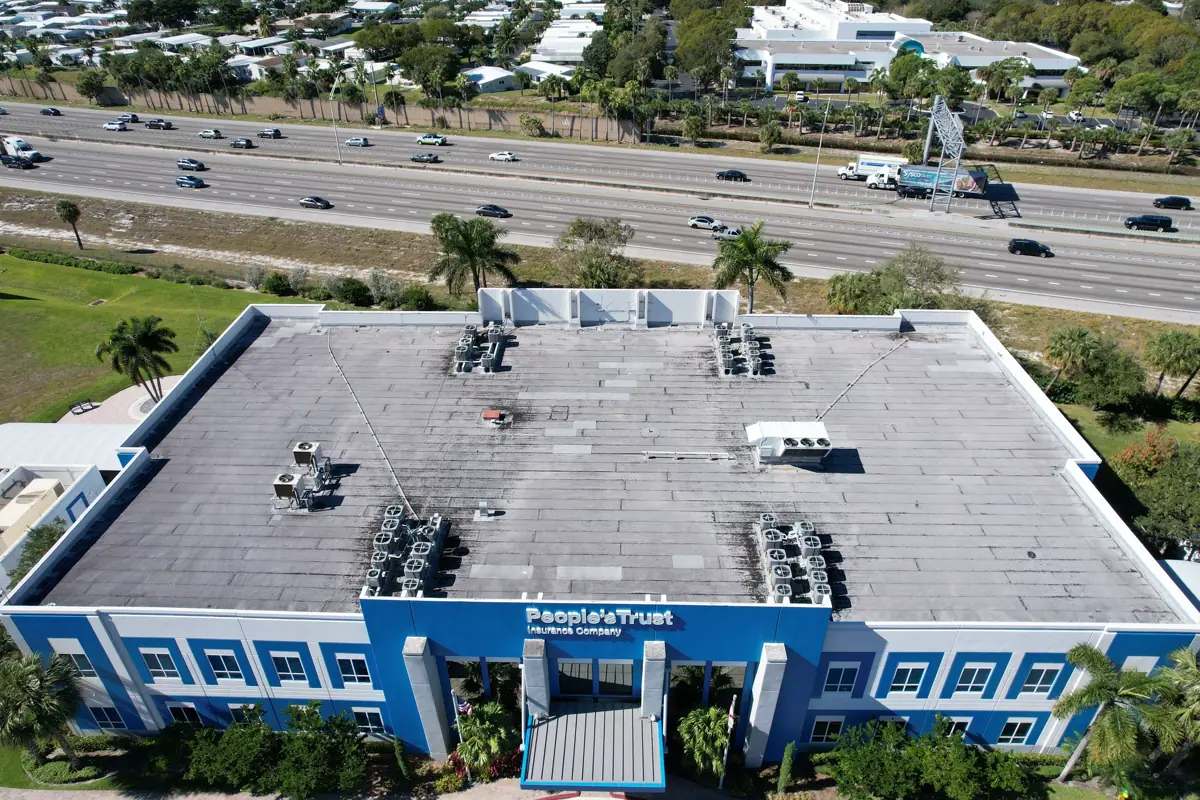
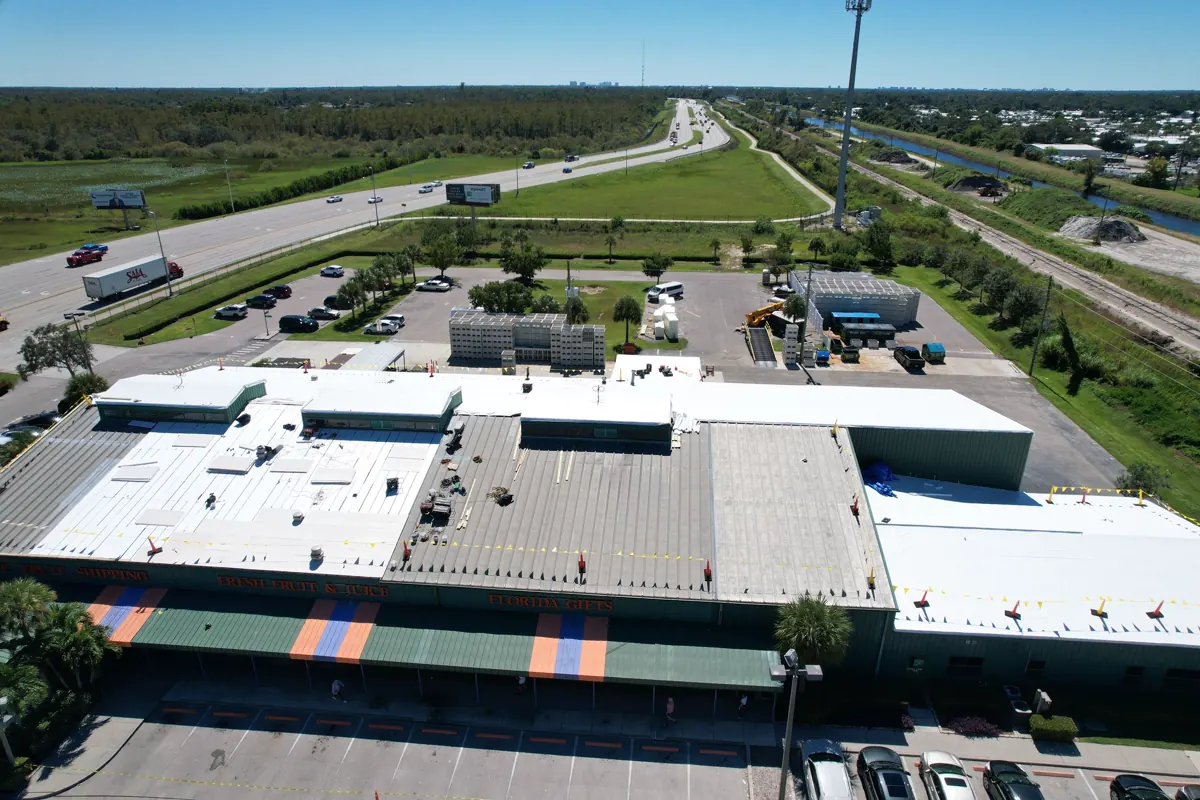
Recover, restoration, and tear-off are different scopes
Membrane recover
A recover installs a new roof covering or assembly over an existing roof that remains in place. The proposed system still needs an approved assembly, compatible substrate, required attachment, and a permit-ready design.
Fluid-applied restoration
A coating or restoration system is applied to an eligible existing surface under the manufacturer’s written preparation, adhesion, thickness, detail, moisture, and warranty requirements. It is not automatically the same as a membrane recover.
Full tear-off and replacement
Tear-off removes existing roofing to the deck or the depth required by the approved scope. It exposes concealed conditions and gives the design team and contractor direct access to replace unsound components, but it generally creates more demolition, disposal, weather exposure, and occupied-building coordination.
Start with the code edition that is actually in force
As of November 11, 2026, the Florida Building Commission identifies the 8th Edition (2023) Florida Building Code as the effective statewide edition. The Commission’s published schedule sets December 31, 2026 as the effective date for the 9th Edition (2026). Projects near that transition should confirm the governing edition and permit date with the authority having jurisdiction.
Use the Commission’s current code resources and supplements, not an undated summary.
Five code and technical gates
1. Existing layers and prohibited conditions
Florida Building Code Section 1511.3 identifies conditions that require existing coverings to be removed rather than recovered, including water-soaked or deteriorated roofing that is not an adequate base, certain covering types, two or more existing applications, unresolved blisters, or an attachment path that cannot meet Section 1504.1.
The complete section, exceptions, local amendments, supplements, and project facts control. A visual walkover alone does not establish compliance.
2. Moisture and concealed conditions
Dry-looking membrane does not prove the insulation, cover board, vapor retarder, or deck is dry. The investigation method should match the assembly and decision. Visual review, records, test cuts, infrared, impedance, or other methods each have limits. An anomaly is not automatically a confirmed quantity of wet material.
3. Attachment and wind-uplift path
The design must show how loads travel from the new covering through the retained assembly to a suitable substrate or structural system. Fastener pull testing, deck review, perimeter and corner zones, edge securement, building height, exposure, and approved assembly requirements may affect the answer.
4. Product approval and manufacturer acceptance
The proposed assembly should match the applicable Florida Product Approval or Miami-Dade Notice of Acceptance where required, plus the manufacturer’s current recover specification. Product names alone do not establish an approved assembly.
5. Drainage, details, and added height or weight
Retaining an existing roof can change curb heights, edge conditions, drain relationships, overflow paths, penetrations, transitions, and equipment clearances. These details must be resolved in the actual scope rather than assumed from a price per square foot.
Recover versus tear-off comparison
| Decision factor | Recover question | Tear-off question |
|---|---|---|
| Existing condition | Can retained layers serve as a verified, compatible base? | What depth must be removed to expose and correct unsound material? |
| Moisture | How will suspect areas be verified, removed, and documented? | What allowance and unit pricing address concealed wet material? |
| Attachment | Can the new system achieve the approved load path through retained layers? | What deck repairs and fastening upgrades are included? |
| Operations | Can work proceed with controlled penetrations, noise, staging, and access? | How will demolition, debris, weather protection, odor, and occupied areas be managed? |
| Future flexibility | What retained layers will a future project inherit? | Does removal create a cleaner documented baseline? |
| Warranty | Will the manufacturer accept the exact retained assembly and inspection record? | What new assembly and issued warranty are included? |
How to level competing proposals
- Map every roof area and identify the proposed scope for each.
- Name the complete base assembly, attachment method, and approved system.
- State how moisture and concealed conditions will be investigated and priced.
- Identify deck, insulation, drainage, edge, curb, penetration, and equipment assumptions.
- Separate base bid, allowances, unit prices, exclusions, alternates, and owner-provided work.
- Attach the product approval, manufacturer requirements, and warranty option.
- Confirm permit, design-professional, inspection, and local-jurisdiction responsibilities.
Questions owners should ask
Is recover always cheaper or faster?
No universal percentage or schedule is honest. Access, retained-layer qualification, testing, attachment, detail work, occupied operations, disposal, and hidden conditions can change both cost and duration.
Can a dry surface still hide wet insulation?
Yes. Surface appearance alone does not establish the condition of concealed components. Use an appropriate project-specific investigation and verification plan.
Does a manufacturer warranty prove code compliance?
No. Manufacturer acceptance, product approval, permit requirements, code compliance, design responsibilities, and warranty coverage are related but separate checks.
Can coating avoid the recover rules?
Do not assume that. The classification and compliance path depend on the actual product, existing assembly, scope, code, approvals, and authority having jurisdiction.
Source and professional-review note
This guide is general planning information, not a project design, code interpretation, engineering conclusion, warranty determination, or permit approval. Confirm the effective code, supplements, local amendments, approved assembly, and property conditions with the authority having jurisdiction and appropriately qualified professionals.
- Florida Building Commission — effective code notice
- Florida Building Commission — current code resources and supplements
- Official 8th Edition Building analysis of changes
Continue with OGC’s repair, coating, and replacement framework, commercial roof inspection scope, and bid-review process.