Commercial Roof Solar Readiness in Florida
Published November 2026 · Ocean Group Construction
Rooftop solar can outlast a weak roofing decision. The roofing question is not whether photovoltaics are a good investment; it is whether the existing roof, details, drainage, access and warranty path are ready to carry a long-lived rooftop system without turning the next repair or reroof into an avoidable disruption.
The direct answer
Evaluate the roof before the solar design is locked. Confirm condition, remaining service horizon, moisture, structural and wind-design responsibilities, attachment or ballast interfaces, drainage, fire and service access, manufacturer requirements, removal/reinstallation terms and closeout documentation. If the roof is likely to need major work during the PV term, price and assign that future work now.
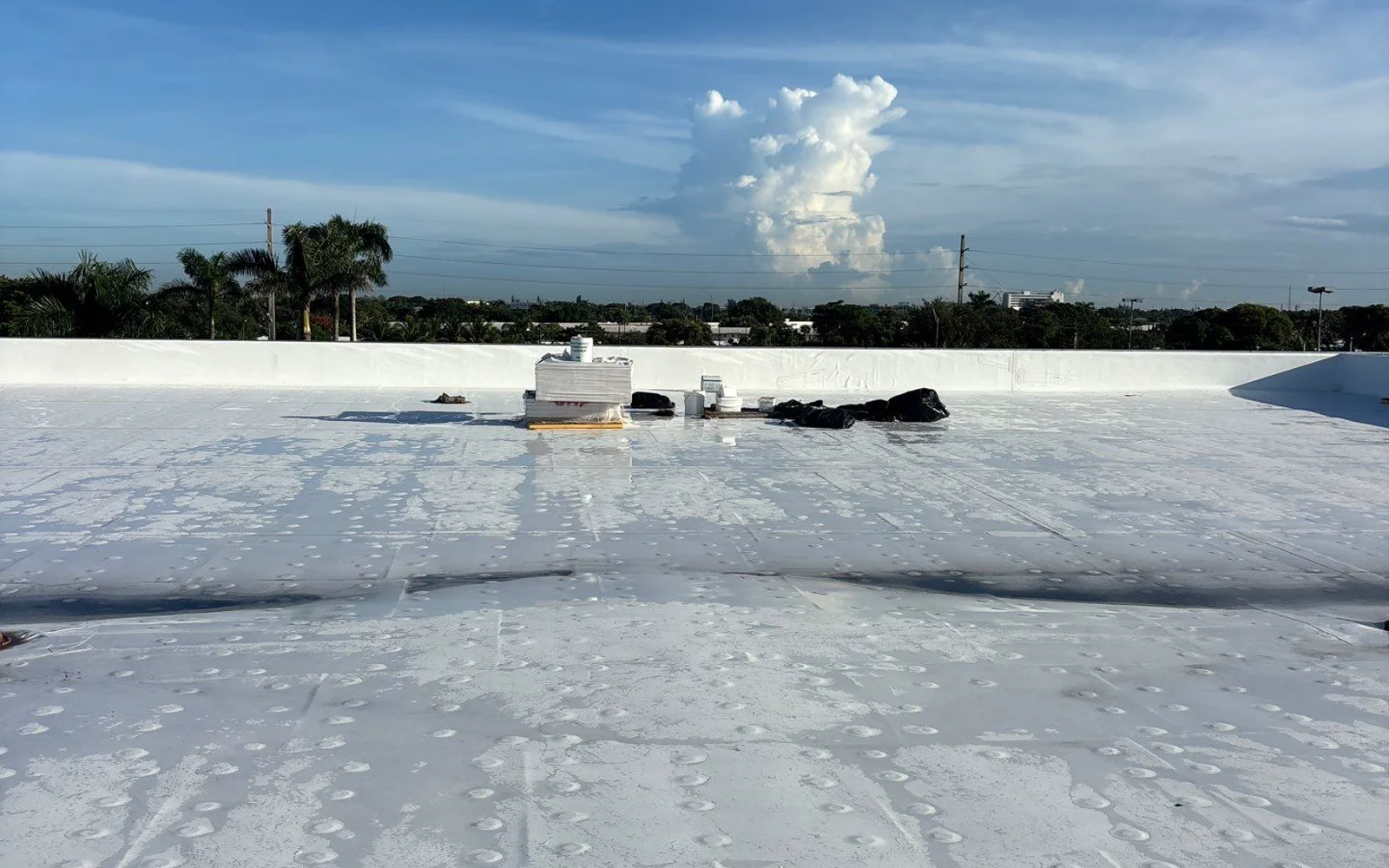
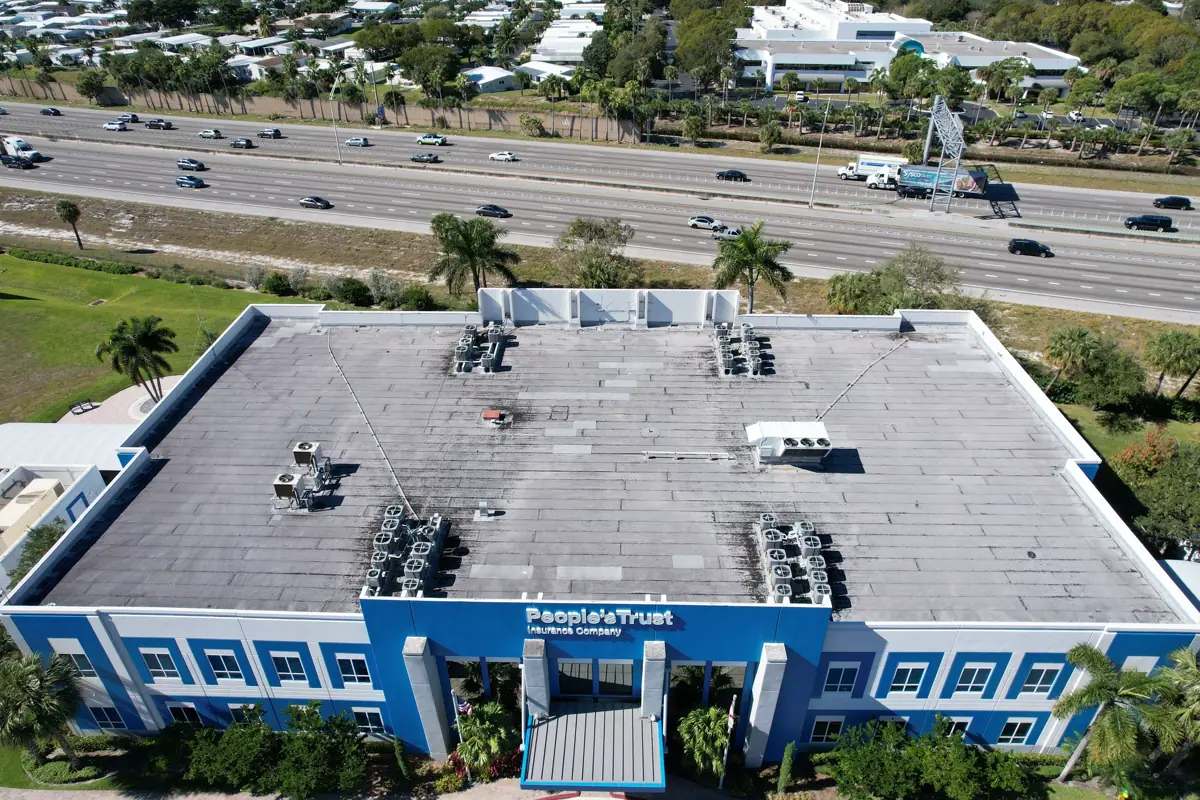
1. Compare the roof horizon with the PV horizon
The U.S. Department of Energy’s commercial rooftop solar guidance recommends assessing whether the roof will require replacement during the life of the PV system. If major roof work is likely, ownership should compare reroofing first with a contract that assigns the future cost and responsibility for temporary PV removal and reinstallation.
Do not use age alone. Review leak and repair history, membrane and flashing condition, drainage, attachment, deck and insulation evidence, previous recover layers, warranty status and planned building work.
2. Verify moisture and concealed conditions
Solar installation increases rooftop traffic and can make future investigation or repair more complicated. A condition review should identify whether suspect areas need appropriate moisture surveying or core verification before attachment zones, walkways and equipment clearances are fixed.
Use the moisture-survey methods guide to distinguish infrared, impedance and core-cut evidence. Neither a dry surface nor a generic percentage proves that the retained assembly is suitable.
3. Assign structural and wind-design responsibility
Florida rooftop systems must be designed for the governing code, wind conditions and project-specific structure. Roofing contractors should not substitute for the solar designer, structural engineer, electrical contractor or authority having jurisdiction. The design team should identify loads, attachment or ballast strategy, component-and-cladding pressures, edge and corner zones, deck capacity and any required product approvals.
As of November 12, 2026, the Florida Building Commission identifies the 8th Edition (2023) Florida Building Code as the effective statewide edition. The Commission’s code resources show the 9th Edition (2026) transition scheduled for December 31, 2026. Confirm the governing edition, supplements and local amendments for the permit date.
4. Protect drainage and roof access
- Keep primary and overflow drainage paths visible and serviceable.
- Preserve access to drains, scuppers, curbs, rooftop equipment and known repair zones.
- Coordinate walkways so maintenance traffic does not create uncontrolled membrane wear.
- Resolve array supports, conduits and equipment pads without trapping debris or water.
- Maintain required perimeter, pathway and fire-service access under the governing code and local fire official.
Florida’s State Fire Marshal identifies the 8th Edition Florida Fire Prevention Code as effective through the current period, with the 9th Edition scheduled for December 31, 2026. The local fire official enforces the code and may have local amendments. Electrical design must also follow the NEC edition adopted for the project and be handled by qualified electrical professionals.
5. Get written roof-manufacturer direction
Do not assume a mounting method, slip sheet, walkway, penetration or service procedure preserves the existing roof warranty. Submit the proposed layout and details to the roof manufacturer or warranty administrator where required. Document inspection, approved details, required roofing work and final acceptance.
Warranty, code compliance and engineering are related but separate. A manufacturer’s written acceptance does not replace permit approval or structural/electrical design, and a permit does not define warranty coverage.
6. Put future reroof logistics in the contract
DOE procurement guidance recommends addressing future roof replacement and major repairs during the PV contract term, including who disconnects, removes, stores, reinstalls and recommissions affected equipment; who pays; how downtime is handled; and what schedule or access rules apply.
Ownership should also preserve as-built drawings, array and conduit layouts, roof warranty records, approved details, inspection reports, photographs, equipment information and contact responsibilities in one closeout file.
Roofing-first readiness checklist
- Current roof assembly and recover history documented
- Condition, leak history and remaining service horizon reviewed
- Suspect moisture areas investigated with an appropriate method
- Structural, wind, electrical and fire-code responsibilities assigned
- Attachment or ballast interfaces coordinated with the roof assembly
- Drainage, perimeter, equipment and service access preserved
- Roof manufacturer or warranty administrator requirements obtained in writing
- Future repair and reroof removal/reinstallation terms priced and assigned
- Construction protection, breach response and final roof inspection defined
- As-builts and closeout records delivered to ownership
Scope boundary
OGC’s role in this guide is roofing readiness and roof-scope coordination. OGC does not claim to provide PV design, electrical design, structural engineering, energy modeling, tax advice or solar-performance guarantees. Those services belong with appropriately licensed professionals and the project’s solar team.
Continue with OGC’s commercial roof replacement, warranty guide, preconstruction support and due-diligence review.